

The Queensland Aboriginal and Islander Health Council (QAIHC) is the peak representative body for the Aboriginal and Torres Strait Islander community controlled health organisation (ACCHO) sector in Queensland.
Members
Our Members are dedicated to improving the health and well-being of Queensland’s Aboriginal and Torres Strait Islander peoples and their communities. ACCHOs deliver holistic, culturally safe care in more than 80 clinics across Queensland. When delivering comprehensive primary health care, ACCHOs also provide treatment, prevention, early intervention, rehabilitation and recovery services.
Role and vision
QAIHC works to support, strengthen and expand the sector’s capacity to deliver high-quality culturally safe care. We focus on system-wide policy and advocacy, sector strengthening and focused Member support.
We advocate for equitable and sustainable funding for ACCHOs, flexible future-fit physical and digital infrastructure; sustained investment in capacity building; a skilled, valued and empowered workforce; and a cultural and governance framework which fosters innovation and self-determination.
You can read our vision for the sector here – Strong sector, strong system: QAIHC’s Ten-Year Blueprint 2024-2034.
Model of care
Empowering Aboriginal and Torres Strait Islander peoples to take charge of their own health advancement is a core element of the ACCHO Model of Care.
The model was developed with respect and understanding of local historical context and cultural values, and ensures that Aboriginal and Torres Strait Islander patients feel culturally safe and free from institutional racism when presenting for care.
Cultural safety is distinguished from cultural ‘awareness’ as it relates to embedding culturally sound practices into all elements of delivery, rather than merely recognising that cultural differences exist.
The values and perspective of the local communities shape the design of the physical attributes of medical services, delivery of those services, their evaluation, cultural policies and engagement mechanisms.
Constitution
QAIHC’s Constitution sets out how the organisation interacts with and is governed by its Members. You can download the latest version of QAIHC’s Constitution, last amended 20 October 2025, here.
National representation
Nationally, QAIHC represents Queensland through its affiliation and membership of the board of the National Aboriginal Community Controlled Health Organisation (NACCHO), the national peak body for the ACCHO sector.
QAIHC’s logos: then to now
QAIHF logo: 1990 – 2004
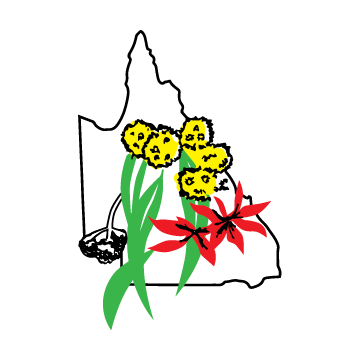
The original QAIHF logo was inspired by Clarence Grogan who entertained guests in Innisfail at the first QAIHF conference by playing a gum leaf. The logo incorporated a gum leaf, gum blossom and gum flower. Mr Grogan was a respected advocate of Indigenous rights in the Cairns area and was inducted into the QAIHC Hall of Fame in 2009.
First QAIHC logo: 2004 – 2016
Following the reconstitution of QAIHF to QAIHC in 2004, the new logo was designed to incorporate the original gum leaf blossom, with 27 dots to represent each Member service.
Current QAIHC logo: 2016 – today
The new QAIHC logo was revealed at the 2016 Member Conference and is designed to reflect a more contemporary QAIHC.
History
Celebrating 36 years of leadership across the Aboriginal and Torres Strait Islander community controlled health sector.
In 1990, a small and dedicated group of Aboriginal and Torres Strait Islander leaders, from across the community controlled health sector in Queensland, met in Mackay to discuss the establishment of a state peak body.
Several other states had already formed their own peak bodies under the National Aboriginal Community Controlled Health Organisation (NACCHO) to advocate on behalf of the growing number of Aboriginal medical services (AMSs) across Australia.
At that time there were seven Aboriginal medical services in Queensland. Chief Executive Officers from services in Cairns, Innisfail, Townsville, Mackay, Brisbane, Ipswich and Stradbroke Island participated in a two-day meeting that resulted in the formation of a Queensland peak body. This group also included a representative of Aboriginal health workers.
Originally established as the Queensland Aboriginal and Islander Health Forum (QAIHF), the organisation would provide a much-needed voice for the ACCHO sector in Queensland. QAIHF was self-funded until 1996, when the Commonwealth Department of Health began providing funding support.
In 2004, QAIHF was reconstituted under the Australian Investment and Securities Commission (ASIC) and assumed its current form as the Queensland Aboriginal and Islander Health Council (QAIHC).
Today, QAIHC is funded by Australian Government Department of Health, Disability and Ageing and Queensland Health. QAIHC also continues to generate its own funding.